How Nature-Inspired Architecture at Rukita Deluxe Nismara Abdul Majid Brings Greener Living to Urban Spaces

Celebrating World Tree Day through thoughtful architecture, greenery, and more sustainable urban living.
As cities continue to grow, finding ways to bring nature into urban spaces has become increasingly important. Trees and greenery do more than beautify their surroundings. They also help regulate temperatures, support biodiversity, and contribute to healthier environments.
Every November 21, World Tree Day serves as a reminder of the important role trees play in maintaining a balanced ecosystem. While planting and preserving trees remain essential, incorporating nature into the way buildings are designed can also be part of a broader approach to sustainable urban development.
At Rukita, sustainability is reflected not only in operational initiatives but also in how living spaces are designed and developed. Rukita Deluxe Nismara Abdul Majid is one example of how architectural elements, natural materials, and greenery can come together to create a more comfortable living environment in the heart of Jakarta.
Also Read: World Cleanup Day 2026 Encourages More Responsible Waste Management
Bringing Nature Closer Through Green Architecture
Living in a busy city does not mean having to stay disconnected from nature. Through thoughtful architectural choices, urban buildings can create opportunities to introduce greenery while responding to the environmental challenges of their surroundings.
This approach is increasingly relevant as people place greater value not only on environmental considerations, but also on the relationship between built environments, nature, and wellbeing. According to JLL’s 2025 Global Consumer Experience Survey, 73% of respondents said that wellbeing and green spaces near workplaces are important, while 77% of full-time workers surveyed believed that green spaces near their workplace improve their wellbeing.
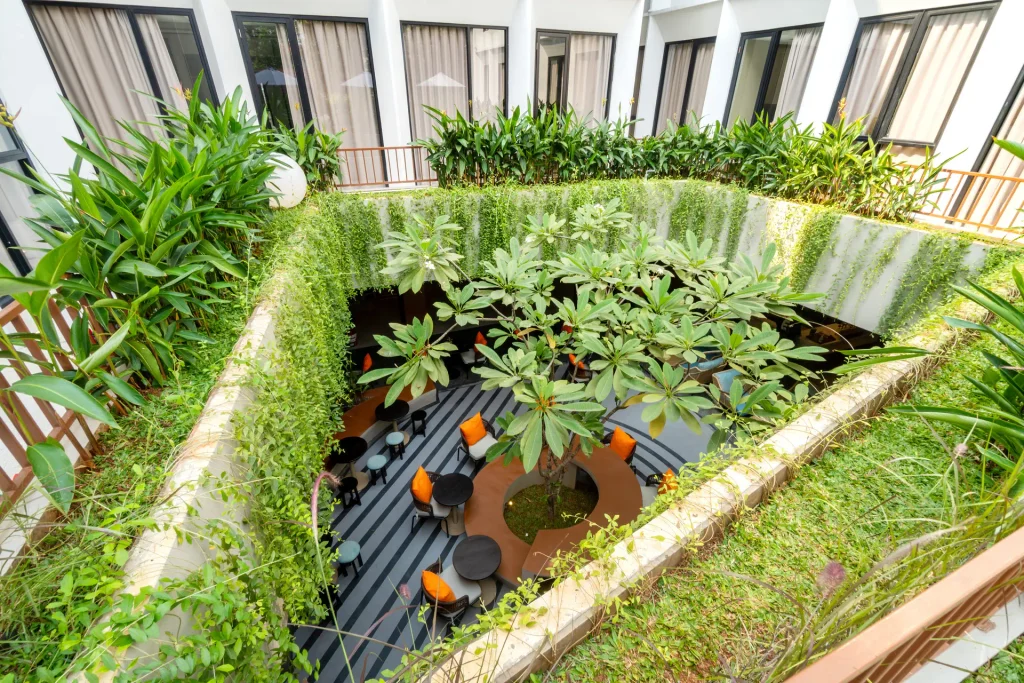
At Rukita Deluxe Nismara Abdul Majid, nature-inspired design is reflected in elements such as vertical greenery, natural materials, and an architectural approach that considers Jakarta’s tropical climate. These features help create a visual connection with nature while contributing to a more pleasant atmosphere for residents.
Vertical gardens, for instance, offer a practical way to introduce plants into buildings where ground space may be limited. By making use of vertical surfaces, greenery can become part of the building’s overall design rather than being restricted to conventional gardens or outdoor spaces.
Beyond their visual appeal, plants can also provide shade and help create a more inviting microenvironment. When thoughtfully selected and maintained, these green elements can make urban living spaces feel more connected to the natural world while reflecting a broader shift toward greener and more climate-conscious urban design.
Architectural Elements That Respond to the Tropical Climate
A sustainable building is not defined by greenery alone. The way a building responds to sunlight, rainfall, and natural airflow also plays an important role in creating a comfortable indoor environment.
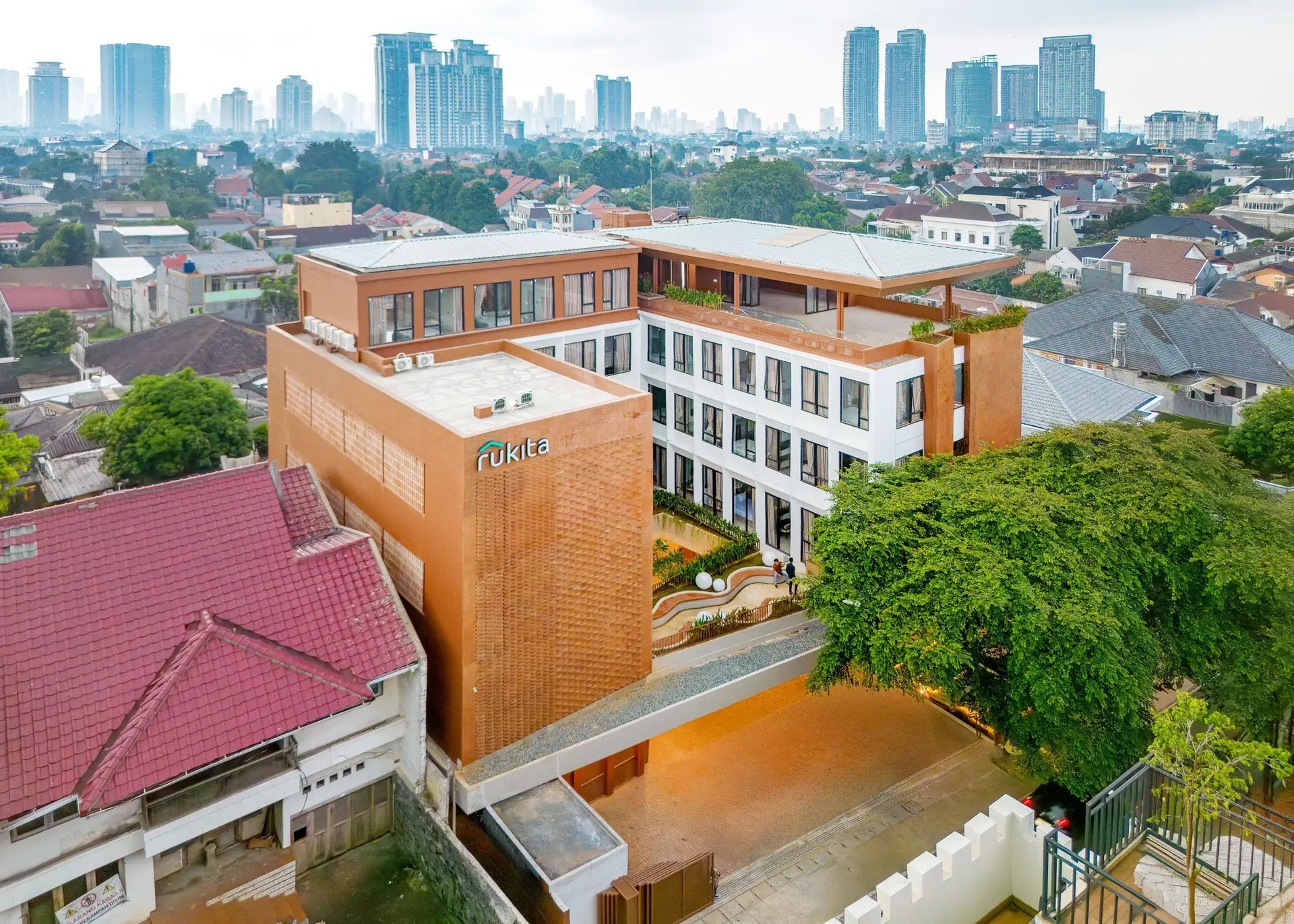
Rukita Deluxe Nismara Abdul Majid incorporates several architectural features that respond to Jakarta’s tropical conditions. Its exterior design combines terracotta finishes, carefully considered building volumes, and open spaces that support both visual character and everyday functionality.
1. Terracotta facade for natural shading
One of the building’s distinctive features is its textured terracotta facade, designed with a staggered and protruding brick pattern. This arrangement can function as a modern interpretation of a brise-soleil, providing shading while still allowing natural light to enter.
By providing shade without completely closing off the facade, this architectural feature balances indoor comfort and natural lighting. It also gives the building a distinctive appearance through the use of earthy materials that reflect the character of the Indonesian tropical environment.
2. Deep roof eaves for weather protection
The building also features deep, wood-clad roof eaves that extend beyond its exterior walls. Besides creating shaded areas, these overhangs provide additional protection from direct sun and tropical rainfall, particularly during Jakarta’s rainy season.
This design demonstrates how architectural details can serve practical environmental purposes. By considering local weather conditions from the beginning, buildings can be designed to respond more effectively to their surroundings.
3. Open spaces that encourage natural ventilation
Another important feature is the open ground-floor pilotis design. By keeping parts of the ground level open, the building fosters a more comfortable outdoor and semi-outdoor environment in Jakarta’s warm and humid climate.
It also highlights how smart building layouts can support passive design strategies instead of relying entirely on mechanical cooling.
Natural Materials That Connect Architecture with Its Surroundings
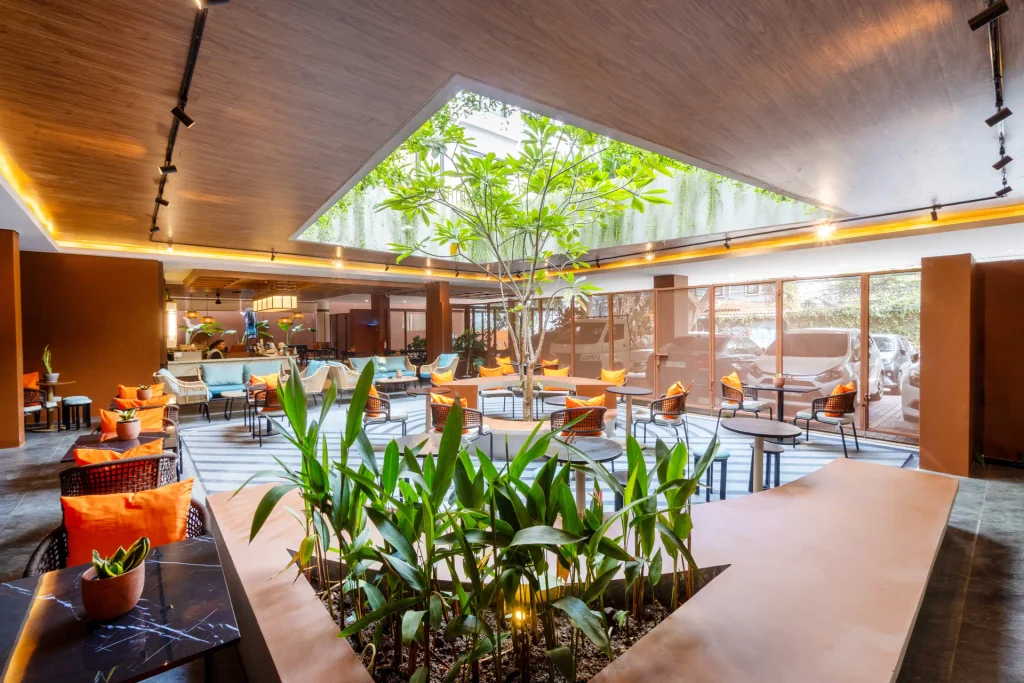
Beyond its exterior, Rukita Deluxe Nismara Abdul Majid brings a sense of warmth into its interior through carefully selected materials and design details. The combination of walnut-toned wood, terracotta accents, and natural textures creates a visual connection between the building’s exterior and indoor spaces.
Terracotta is particularly interesting because it reflects local material traditions while adding an earthy character to contemporary architecture. Its use in decorative finishes, geometric patterns, and traditional Indonesian breeze blocks (roster) can also help introduce texture and support airflow between spaces.
The interior design further incorporates natural elements through details such as rattan-inspired craftsmanship and native trailing plants. These biophilic touches help soften the overall appearance of the interiors while creating a closer visual relationship with nature.
Rather than treating natural materials and greenery as decorative additions, this approach makes them part of the building’s architectural identity. It shows how local craftsmanship and contemporary design can work together to create spaces that feel both functional and connected to their environment.
Making Urban Living More Sustainable Through Thoughtful Design
The relationship between architecture and sustainability goes beyond how a building looks. Design decisions can influence how people experience their surroundings, how buildings respond to local climates, and how natural elements are incorporated into everyday spaces.
Features such as shaded facades, roof overhangs, natural ventilation, and greenery demonstrate how thoughtful planning can support a more climate-responsive approach to urban housing. While these elements do not replace the importance of protecting existing trees and expanding urban green spaces, they can complement broader efforts to create more environmentally conscious built environments.
For residents, the presence of greenery and natural materials can also make everyday spaces feel more welcoming. It creates opportunities to experience a closer connection with nature, even while living in a densely populated city.
This reflects Rukita’s broader approach to ESG, where environmental responsibility can be integrated into different aspects of property development and management. From operational improvements to architectural considerations, every thoughtful decision can contribute to creating better living spaces.
Growing Towards a Greener Future
World Tree Day offers a timely reminder that greener cities are shaped not only by the trees we plant, but also by the way we design, develop, and manage the spaces around them. At Rukita Deluxe Nismara Abdul Majid, elements such as greenery, natural materials, shading, and climate-responsive design show how nature can be thoughtfully integrated into everyday urban living.
As a proptech company, Rukita believes that creating better living spaces also means taking responsibility for the environment. This commitment is reflected not only in the architectural considerations behind its properties but also in the building standards, responsible property management practices, and broader ESG initiatives that guide its operations. While architecture alone cannot solve the environmental challenges facing growing cities, combining thoughtful design with consistent environmental efforts can help create more comfortable, resilient, and nature-connected communities.
Ultimately, Rukita’s approach to ESG goes beyond individual buildings. It is about making sustainability part of how the company develops and manages living spaces, because creating a better home also means caring for the environment we all share.
Bagikan artikel ini